TOPOGRAPHY SCAN CORNEAL MAPPING PACHYMETRY 545 μm ✓ NORMAL KERATOMETRY 43.5 / 44.2 D Al-Shifa · Cornea & Refractive Surgery
Annual Transplants
800+ Procedures
Cornea & Refractive Surgery

Expert Cornea
Care & Surgery

Corneal Transplantation & Refractive Sub-specialty

The Department of Cornea and Refractive Surgery at Al-Shifa Eye Hospital is Pakistan's highest-volume corneal transplant centre, performing over 800 corneal transplants annually. Our internationally fellowship-trained corneal surgeons manage the complete spectrum of anterior segment and corneal disease — from advanced keratoconus and corneal dystrophies to complex surface disorders requiring amniotic membrane reconstruction.

Equipped with the latest excimer laser platform for Femto-LASIK and Contoura Vision, our refractive surgery programme offers spectacle independence with the precision of topography-guided ablation. The department combines decades of surgical expertise with state-of-the-art diagnostics including corneal topography, Scheimpflug tomography, and specular microscopy.

Common Conditions Treated

Advanced Diagnostics,
Precision Corneal Surgery

Every patient presenting to our cornea clinic undergoes a comprehensive anterior segment evaluation, including slit-lamp biomicroscopy, corneal topography and tomography with Pentacam Scheimpflug imaging, and specular microscopy for endothelial cell count. This multi-layered assessment ensures every surgical decision is grounded in objective data.

"In corneal surgery, precision is everything. A well-planned DALK or DMEK, guided by thorough pre-operative mapping, gives the patient the best possible chance of visual rehabilitation."

— Prof. Dr. Wajid Ali Khan, Chief of Medical Services & HOD, Cornea

Our corneal surgery theatre is equipped with the SCHWIND AMARIS 1050RS excimer laser — one of the most advanced platforms available — for Femto-LASIK, LASEK, and topography-guided Contoura Vision procedures. For transplantation, we perform DALK and DMEK using the latest microkeratome and air-injection techniques, offering patients faster visual recovery and significantly reduced rejection risk compared to traditional full-thickness grafts.

State-of-the-Art
Corneal Technology

Pentacam Scheimpflug

Comprehensive 3D corneal tomography — maps curvature, thickness, and elevation for keratoconus detection and surgical planning.

SCHWIND AMARIS Excimer

1050Hz high-frequency laser with eye tracker for Femto-LASIK, LASEK, and Contoura Vision topography-guided ablation.

Specular Microscopy

Endothelial cell count and morphology assessment — essential for graft selection and post-transplant monitoring.

Cross-linking UV System

Avedro KXL accelerated corneal cross-linking system — gold-standard treatment to halt keratoconus progression.

Your Treatment Pathway

1
Initial Consultation & Slit-Lamp Examination

A detailed history is taken followed by a full anterior segment slit-lamp examination, visual acuity, and refraction assessment.

2
Corneal Mapping & Imaging

Pentacam tomography, topography, specular microscopy, and corneal OCT are obtained. Results are reviewed by the cornea consultant same day.

3
Treatment & Surgical Planning

A personalised plan is formulated — medical therapy, cross-linking, refractive laser, or corneal transplantation depending on pathology severity.

4
Surgical Intervention

Procedures are performed in our sterile laminar-flow cornea theatre, with full anaesthesia support and modern microsurgical instrumentation.

5
Post-operative Rehabilitation

Structured follow-up including suture management, graft monitoring, and visual rehabilitation with contact lenses or spectacles as needed.
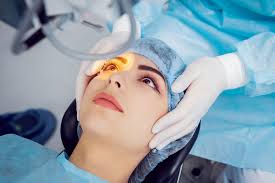
Cornea Procedures & Surgeries

From glasses-free LASIK to full corneal transplantation — every procedure performed by fellowship-trained subspecialists.

Femto-LASIK

Bladeless, all-laser LASIK using a femtosecond laser to create the corneal flap, followed by excimer laser ablation for precise vision correction.

15–20 minutes

Contoura Vision

Topography-guided laser correction that treats not just the prescription but also microscopic corneal irregularities for superior visual quality.

20–30 minutes

Corneal Cross-linking (CXL)

Accelerated CXL using riboflavin and UV-A light to halt keratoconus progression by stiffening corneal collagen fibrils — gold standard treatment.

60–90 minutes

DALK (Lamellar Transplant)

Deep Anterior Lamellar Keratoplasty — replaces only the diseased anterior cornea, preserving the patient's own healthy endothelium to reduce rejection risk.

90–120 minutes

DMEK (Endothelial Transplant)

Descemet Membrane Endothelial Keratoplasty — ultra-thin graft transplantation for Fuchs dystrophy and bullous keratopathy with rapid visual recovery.

60–90 minutes

Amniotic Membrane Transplant

AMT for persistent corneal epithelial defects, severe chemical burns, and Stevens-Johnson syndrome — promoting corneal surface healing and reducing scarring.

30–60 minutes
Patient Stories

Voices of Our Patients

Real accounts from patients whose sight was restored by our cornea and refractive surgery team.

"I had keratoconus in both eyes and was told I would eventually need transplants. Dr. Hassan Mansoor performed cross-linking and my condition has been completely stable for three years. I am wearing soft contact lenses again and living a full life. I am forever grateful to this team."

AK
Asad Khan
Islamabad — Keratoconus Cross-linking

"I wore glasses for 18 years with a very high prescription. After Femto-LASIK at Al-Shifa I woke up the next morning with perfect vision. The whole procedure was painless and the staff was incredibly professional. I wish I had done this years ago."

SB
Sana Baig
Rawalpindi — Femto-LASIK Vision Correction

See Clearly Without Glasses?

Whether you need a LASIK screening, treatment for keratoconus, or a corneal transplant assessment — our team is ready to see you this week. Pakistan's highest-volume cornea centre is here for you.

Book Appointment 051-111-741-741